AI Language Model in 2026: What They Are, How They Work, and Which Are Best
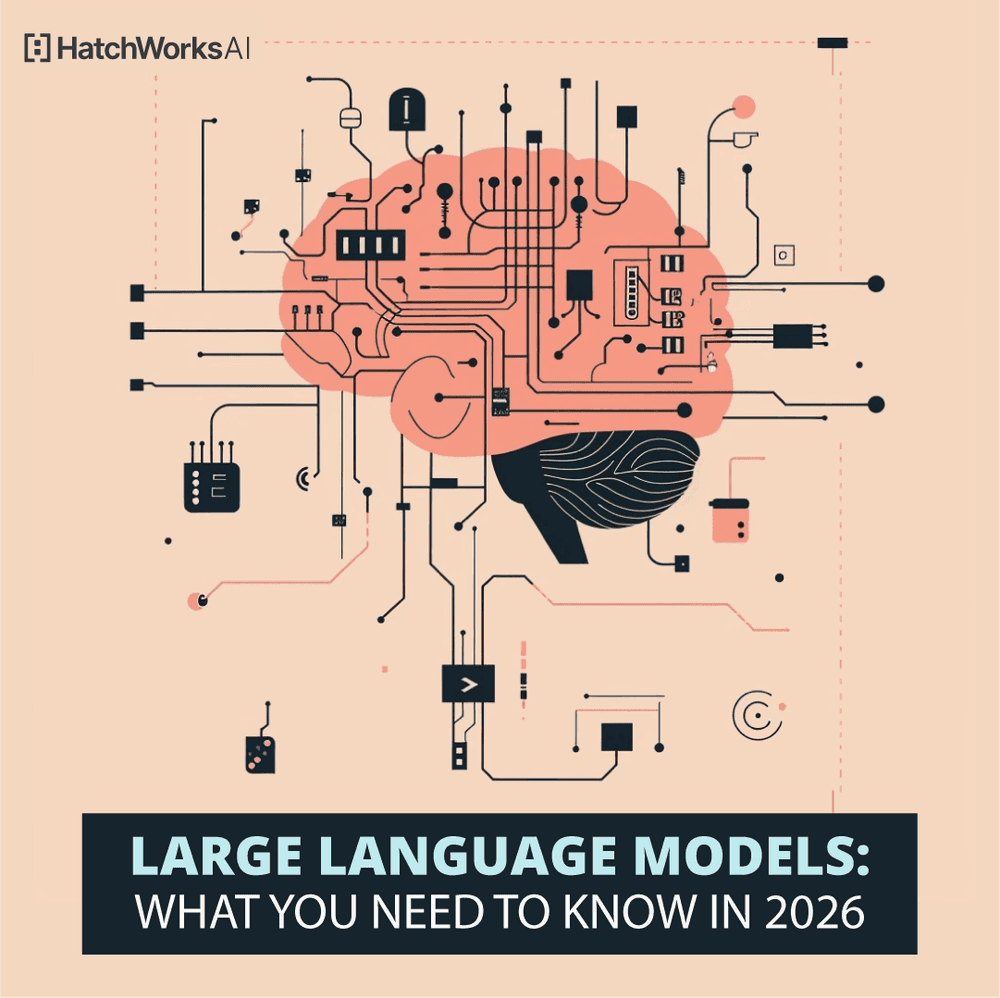
An AI language model is the engine behind every AI chatbot, writing assistant, and AI companion you use in 2026. Understanding what an AI language model is — and how the best ones differ — helps you choose the right tool for any task. This guide covers what AI language models are, how they work, and a review of the top models available in 2026.
!AI language model guide 2026 — how they work and top models compared
What Is an AI Language Model?
An AI language model is a type of machine learning system trained on massive amounts of text to understand and generate human language. They learn statistical patterns in text — what words, sentences, and ideas tend to follow each other — and use this to generate coherent, contextually relevant responses.
Modern AI language models (also called large language models, or LLMs) are trained on trillions of words from books, websites, code repositories, scientific papers, and other text sources. The result: systems that can write, reason, summarize, translate, code, answer questions, and engage in conversation.
Key terms explained: - Large language model (LLM): An AI language model with billions or trillions of parameters, trained on vast text corpora - Parameters: The learned weights in the model — more parameters generally means more capability - Context window: How much text the model can "see" at once — larger windows allow longer documents and conversations - Fine-tuning: Additional training on specific data to specialize model behavior (e.g., for safety, instruction following, or specific domains)
How AI Language Models Work
AI language models are built on transformer architecture, introduced in Google's 2017 "Attention Is All You Need" paper. The core mechanism:
- 1.Tokenization: Text is broken into tokens (roughly 3/4 of a word on average)
- 2.Embedding: Tokens are converted to numerical vectors representing meaning
- 3.Attention: The model learns which parts of the input to focus on when generating each output token
- 4.Prediction: The model predicts the next most likely token, one at a time, building the response
The "large" in large language model refers to scale — modern models have billions to trillions of parameters, trained on compute clusters consuming megawatts of power. GPT-4 is estimated at approximately 1.8 trillion parameters. Llama 3 70B has 70 billion parameters. Scale enables capability, but efficiency improvements mean smaller models are closing the gap.
Best AI Language Models in 2026
1. GPT-4o (OpenAI) — Best General-Purpose AI Language Model
GPT-4o is OpenAI's flagship multimodal language model — the best general-purpose AI language model for most tasks in 2026.
Strengths: - Strongest reasoning and instruction-following of any commercial model - Multimodal: processes text, images, audio, and video - Largest context window (128K tokens) in the GPT-4 family - Best at complex multi-step reasoning tasks - Available in ChatGPT (free and Plus tiers)
Honest limitations: Not open-source. Free tier has usage limits. Expensive at scale via API ($5/million input tokens, $15/million output tokens). No adult content.
Best for: Complex reasoning, coding, research, document analysis, and general productivity AI tasks.
2. Claude 3.5 Sonnet (Anthropic) — Best AI Language Model for Writing
Claude 3.5 Sonnet is Anthropic's leading model — widely regarded as the best AI language model for long-form writing, analysis, and nuanced reasoning in 2026.
Strengths: - Best prose quality and writing style of any commercial model - Strong at following complex, multi-part instructions - 200K token context window — handles book-length documents - Safety-focused training with minimal hallucination - Excellent for document analysis and summarization
Honest limitations: Not open-source. No adult content. Rate-limited on free Claude.ai tier. API pricing comparable to GPT-4o.
Best for: Professional writing, document analysis, research synthesis, and complex instruction-following.
3. Gemini 1.5 Pro (Google) — Best AI Language Model for Context
Google's Gemini 1.5 Pro offers the largest context window of any widely available AI language model — 1 million tokens in standard access, 2 million tokens for enterprise.
Strengths: - Largest context window available (1M+ tokens = approximately 750,000 words) - Handles entire codebases, long documents, and extended conversation history - Multimodal: text, images, audio, video, and code - Strong integration with Google Workspace tools - Competitive pricing via API
Honest limitations: Reasoning quality slightly below GPT-4o and Claude 3.5 Sonnet on complex tasks. No adult content. Google ecosystem dependency.
Best for: Long document analysis, large codebase reasoning, and tasks requiring massive context.
4. Llama 3 (Meta) — Best Open-Source AI Language Model
Meta's Llama 3 is the best open-source AI language model in 2026 — freely downloadable, commercially usable, and the foundation for thousands of fine-tuned models.
Strengths: - Completely open-source and free to download and run locally - Llama 3 70B approaches GPT-4 quality on many benchmarks - 128K token context window - Large ecosystem of fine-tuned variants (instruction-tuned, chat, specialized) - Run locally for complete privacy and no API costs - Foundation for NSFW and adult-content models via community fine-tunes
Honest limitations: Requires significant compute to run the larger variants locally (70B needs ~40GB VRAM). Smaller models (8B) are much less capable. No guaranteed support.
Best for: Developers, researchers, privacy-conscious users, and anyone building AI applications needing local deployment.
5. Mistral Large (Mistral AI) — Best European AI Language Model
Mistral AI is a French AI company that has produced some of the most parameter-efficient models in 2026. Mistral Large competes with GPT-4-class models at lower cost.
Strengths: - Strong reasoning quality at competitive pricing - Mistral 7B is the most capable small open-source model - Mixtral (mixture-of-experts architecture) achieves GPT-3.5 quality at fraction of compute - European data residency option for compliance-sensitive applications - Open weights for smaller models
Honest limitations: Smaller ecosystem than OpenAI/Google. Less multimodal capability. Fewer integrations.
Best for: Cost-efficient API deployment, European compliance requirements, and efficient open-source deployment.
AI Language Model Comparison
| Model | Best For | Context Window | Open Source | Adult Content | Free |
|---|---|---|---|---|---|
| GPT-4o | General reasoning | 128K | No | No | Limited |
| Claude 3.5 Sonnet | Writing, analysis | 200K | No | No | Rate limited |
| Gemini 1.5 Pro | Long documents | 1M+ | No | No | Rate limited |
| Llama 3 70B | Local/private | 128K | Yes | Via fine-tunes | Free |
| Mistral Large | Cost efficiency | 32K | Partial | No | API only |
AI Language Models for Companion AI
Most AI language models are designed for productivity — writing, coding, analysis. They apply strict content filters and do not support adult or intimate conversation.
For companion AI built on language models without content restrictions: PLEASUR AI uses AI language model technology specifically optimized for companion relationships — persistent memory across conversations, adult content capability, and character consistency. Free to start.
The underlying LLM technology is the same foundation — the differentiation is in fine-tuning, memory architecture, and content policy.
The AI Language Model Market in 2026
Data on the AI language model landscape:
- 49,500+ monthly searches for "AI language model" — reflecting strong developer and researcher interest (DataForSEO, 2026)
- The AI language model market is projected to reach $259.8 billion by 2030, growing at 69.5% CAGR from 2024 (Grand View Research, 2024)
- GPT-4 class models have over 100 million active users globally across ChatGPT — the most widely deployed AI language model
- Llama 3 models have been downloaded over 350 million times on Hugging Face — the most downloaded open-source AI language model (Meta, 2025)
- The gap between closed and open-source AI language models narrowed significantly in 2025 — Llama 3 70B benchmarks within 15% of GPT-4o on most standard evaluations
- Enterprise AI language model API spend exceeded $8 billion in 2025, with OpenAI holding approximately 60% market share (Andreessen Horowitz, 2025)
- Context window size has become the primary commercial differentiator — enabling document-length analysis that was impossible with 4K-token models of 2022
How to Choose the Right AI Language Model
For general tasks and productivity: GPT-4o via ChatGPT — the most versatile, best free tier, most integrations.
For writing and analysis: Claude 3.5 Sonnet — best prose quality, largest context window, least hallucination.
For long document analysis: Gemini 1.5 Pro — 1 million token context handles entire books and codebases.
For privacy and local deployment: Llama 3 — open source, runs on your hardware, no data leaves your machine.
For cost-efficient API applications: Mistral — strong quality at lower cost per token than GPT-4o.
For AI companion with adult content: PLEASUR AI — LLM-powered companion with persistent memory, adult content, free.
FAQ: AI Language Model
What is an AI language model? An AI language model is a machine learning system trained on vast amounts of text to understand and generate human language. Modern large language models (LLMs) like GPT-4o, Claude, and Llama 3 use transformer architecture to generate contextually relevant text responses.
What is the best AI language model in 2026? GPT-4o for general tasks. Claude 3.5 Sonnet for writing and analysis. Gemini 1.5 Pro for long document analysis. Llama 3 for open-source and local deployment. The "best" depends on your specific use case.
What is the difference between an AI language model and a chatbot? An AI language model is the underlying technology — the model itself. A chatbot is an application built on top of an AI language model. ChatGPT is a chatbot powered by GPT-4o. Claude.ai is a chatbot powered by Claude 3.5 Sonnet. PLEASUR AI is a companion chatbot powered by LLM technology.
Are AI language models free to use? Many AI language models have free tiers with usage limits (ChatGPT, Claude.ai). Open-source models like Llama 3 are completely free to download and run locally. API access for developers is typically pay-per-token.
What is an open-source AI language model? An open-source AI language model makes its weights (the trained parameters) publicly available for download, modification, and deployment. Meta's Llama 3 and Mistral 7B are the leading open-source AI language models. Open-source models can be run locally, fine-tuned, and used commercially without API fees.
How large are AI language model context windows in 2026? Context windows have grown dramatically: GPT-4o at 128K tokens (~100,000 words), Claude 3.5 at 200K tokens (~150,000 words), Gemini 1.5 Pro at 1 million tokens (~750,000 words). A standard novel is about 100,000 words — modern AI language models can process multiple books at once.
Can AI language models be used for adult content? Most commercial AI language models (GPT-4o, Claude, Gemini) apply strict content filters preventing adult content. Open-source models like Llama 3 can be fine-tuned to remove these restrictions. Platforms like PLEASUR AI build companion applications on LLM technology with adult content capability.
The Bottom Line
AI language models in 2026 are more capable, more accessible, and more differentiated than ever.
For general productivity: GPT-4o. For writing excellence: Claude 3.5 Sonnet. For massive context: Gemini 1.5 Pro. For open-source freedom: Llama 3. For cost efficiency: Mistral.
For AI companion relationships with memory and no content restrictions: PLEASUR AI — built on language model technology but designed for connection, not just productivity.
The AI language model revolution is past the hype phase — these tools now genuinely accelerate every knowledge work and creative task they touch.